


The main cause of acute knee pain in patients over 50 is gonarthrosis (deforming arthrosis of the knee joint).The disease is characterized by rapid progression and can cause invalidity and disability, therefore timely identification of symptoms of osteoarthritis in the knee joint and treatment of the disease, including at home, are the main tasks when examining patients at risk of pathologies in the musculoskeletal system.
What is osteoarthritis of the knee joint
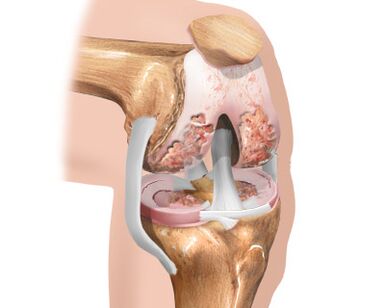
The knee joint is one of the most mobile joints in the human skeleton, subject to injuries and other mechanical damage.It connects the tibia and femur as well as the largest sesamoid bone, which is located in the tendons of the quadriceps femoris muscle (patella or kneecap).The surfaces of the joint are covered with cartilage tissue - a dense, elastic substance that surrounds chondrocytes (oval cells formed by chondroblasts) and creates a protective shell around them, and also acts as a shock absorber.
Cartilage tissue contains collagen, a fibrillar protein that is the main element of connective fibers and provides the strength and elasticity of cartilage, and glucosamine.Glucosamine is a substance produced by cartilage tissue.Glucosamine is a component of chondroitin and is part of synovial fluid - a yellowish elastic mass that fills the joint cavity and acts as a lubricant.If the synthesis of glucosamine and proteoglycans is disturbed, the amount of synovial fluid decreases, which leads to exposure of parts of the joint and intense pain, therefore treatment of grade 1 knee osteoarthritis always includes the use of drugs with glucosamine and chondroitin.
- What happens in joints with osteoarthritis:
- the cartilage becomes soft and loose, and deep wounds appear on the surface;
- the synovial membrane thickens;
- the composition of the synovial fluid changes, its secretion decreases;
- sprains of ligaments and joint capsule occur;
- the joint cavity is filled with exudate - inflammatory fluid released from the blood vessels during the period of acute inflammation.
In the absence of timely and appropriate treatment, osteoarthritis leads to complete deformation and destruction of the knee joint, while the patient may experience both unnatural mobility and complete immobility of the joint.To stop the process of destruction of the articular and cartilage surface in the case of diagnosed osteoarthritis of the knee, the doctor may suggest endoprosthetics - a surgical operation to replace the damaged joint with an artificial prosthesis of the appropriate size.If indicated, the operation can be performed within a quota within the compulsory health insurance program.
Classification and etiological factors
Osteoarthritis of the knee joint can be primary or secondary.Primary arthrosis is diagnosed in cases where it is impossible to accurately determine the cause of the pathology.If cartilage deformation was preceded by other diseases and pathologies, knee injuries, arthrosis is considered secondary, that is, developing on the background of a primary disease.
- The main causes of secondary osteoarthritis of the knee joints include:
- various dysplasias and other pathologies in which improper development and formation of tissue occurs;
- neurodystrophic diseases of the lumbar or cervical spine;
- inflammation of the knee joint (arthritis);
- injuries and microtraumas in the joint;
- surgical removal of the damaged meniscus or part of it (meniscectomy);
- diseases of the endocrine system and hormonal disorders, where the speed of metabolic reactions is slowed down and the metabolism in bone tissue is disturbed.
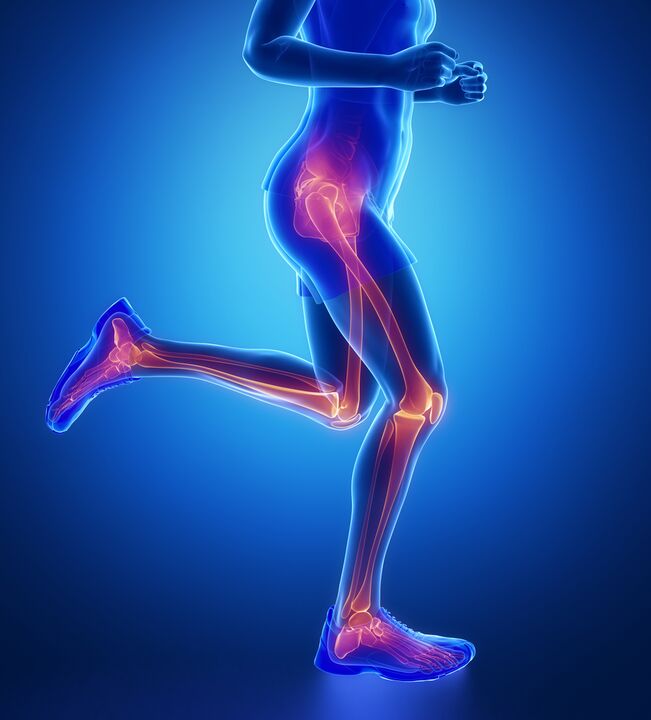
Primary osteoarthritis of the knee joint often develops in people who lead a sedentary lifestyle or, conversely, who regularly experience increased physical stress on the knee joint.Obese patients, people over 50, residents of environmentally unfavorable areas, patients with various forms of addiction to toxic substances (smokers, drug addicts, alcoholics) also have an increased risk of developing gonarthrosis.
Regular hypothermia can contribute to inflammation and further deformation of the knee joint, so people with a tendency to diseases of the musculoskeletal system are advised to observe the temperature regime and avoid activities associated with prolonged exposure to low temperatures (working outside, in refrigerators and freezers, etc.).
Women over 45 who are interested in how to treat knee arthrosis should know that a provoking factor in the development of pathology can be reduced estrogen synthesis, which can occur after menopause and with certain gynecological diseases: endometrial hyperplasia, uterine fibroids, fibroadenoma, endometriosis.A negative factor is also various diets that limit the consumption of foods rich in minerals, vitamins and other elements necessary for joint health.
Signs and symptoms
In order for the prognosis for future life to be as favorable as possible, it is important to know not only how to treat knee osteoarthritis, but also what symptoms the disease manifests.This is necessary for timely contact with a specialist and early detection of possible deformations and other damage to the knee joint.In the initial stage, the pathology has rather sparse symptoms, so grade 1 knee arthrosis can only be detected after hardware and instrumental diagnostics.
- The first symptoms of the disease include:
- morning stiffness in the knee;
- pain when walking, when covering a distance of more than 1-1.5 km;
- pain in the knees when sitting for long periods (more than 2 hours in a row);
- painful sensations in the knee joint after prolonged standing;
- knee pain that occurs at the end of the day or in the first half of the night.
If the patient does not receive the necessary treatment at this stage, the disease will progress.In order to choose the right medicine for arthrosis of the knee joint, it is necessary to go through a series of diagnostic studies (MRI, computed tomography, radiography, etc.) and determine the degree of deformation, the level of synovial fluid in the joint cavity, the density of cartilage tissue and synovial membrane.Symptoms of grade 2 and 3 knee osteoarthritis are listed in the table below.
| Diagnostic sign | Osteoarthritis of the knee 2 degrees | Osteoarthritis in the knee 3 degrees |
|---|---|---|
| Pain during rest at night | May occur when you change body position or get out of bed. | Occurs without any movement. |
| Possibility to use public transport (except low-floor buses) | The patient experiences pain when climbing stairs, but with certain limitations he can use public transport without assistance. | The patient cannot get on a bus or tram by himself due to limited mobility in the knee joint. |
| Lameness | A little expressed. | The lameness is severe and additional support (canes) is required for movement. |
| Stiffness in the knee after waking up | Lasts less than 10-15 minutes. | Lasts about 20-30 minutes or longer. |
| Pain when walking | Occurs after passing 800-1000 m. | They begin at the beginning of the movement and intensify after traveling a distance of less than 500 m. |
| Self-care ability | Normally saved. | The patient cannot perform a number of actions without assistance. |
Treatment of osteoarthritis in the knee joint at home
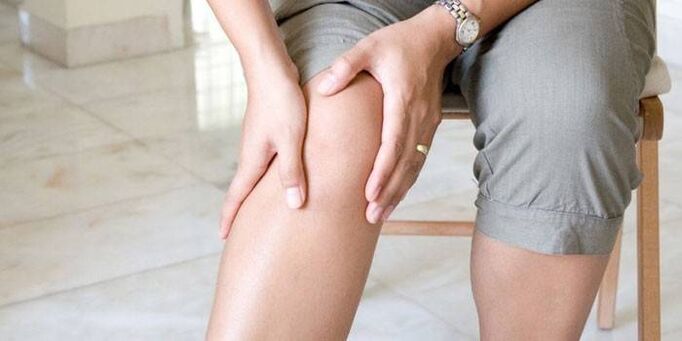
- Treatment of osteoarthritis of the knee joint can be carried out using:
- medical methods;
- physical therapy;
- massage.
The use of traditional medicinal recipes is possible only after consultation with your doctor and should not replace the main treatment prescribed by a specialist.The choice of drugs and methods of treatment depends not only on the patient's age and his existing chronic diseases, but also on the stage of osteoarthritis and the degree of deformation of the cartilage and joint surface.
Osteoarthritis 1st degree
This is the mildest form of arthrosis, which in most cases can be cured with minor medication correction and additional measures: massage, exercise therapy, physiotherapeutic treatment.The most effective method of treating knee arthrosis, regardless of the stage, is laser therapy.This is the main method of physiotherapy that gives quite good results in the initial phase of osteoarthritis.
- It helps achieve the following effect:
- the degree of inflammation in the joint cavity decreases;
- the intensity of pain decreases;
- the process of tissue regeneration is stimulated;
- the need to use glucocorticosteroids and other drugs with serious side effects disappears.
As an alternative to laser therapy, the doctor may suggest pulse magnetic therapy, acupuncture, electromyostimulation and electrophoresis.All these methods are quite effective in the treatment of arthrosis with a degree of deformation of no more than 20-25%, but the effectiveness of the treatment will be higher if they are combined with physiotherapy and massage.Orthopedists and surgeons note the positive effect of using aquatic exercises for the purpose of developing muscle strength in the legs.Patients with grade 1-2 arthrosis of the knees can be offered sanatorium-resort treatment (during a period of stable remission), including mud therapy, heating in a sauna and medicinal baths.Obese patients are prescribed a special diet, as obesity is one of the main factors in the development of osteoarthritis of the knees.
Osteoarthritis 2 degrees
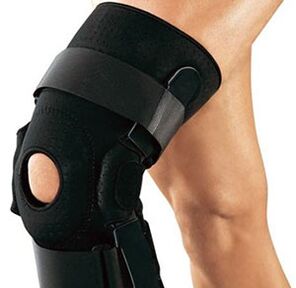
Treatment of grade 2 osteoarthritis of the knee joint includes physiotherapy and massage (outside the acute period), specialist nutrition, physiotherapy and medication.It is very important to reduce the load on the damaged joint: limit walking, avoid movements that require bending the knee.With rapidly progressing arthrosis, the use of special orthoses is indicated - orthopedic devices designed to fix the diseased joint and limit its mobility.
- The drug treatment regimen may include the following drugs:
- chondroprotectors with glucosamine and chondroitin;
- non-steroidal anti-inflammatory drugs;
- intra-articular injections of hyaluronic acid;
- injections of glucocorticosteroid hormones.
The diet of patients with knee osteoarthritis should contain a sufficient amount of collagen-rich foods.
- These are:
- products with gelling additives (jelly, jelly, jellied meat, aspic);
- products with added pectin;
- fish oil
Almost all fruits and berries contain essential amino acids and minerals that help maintain joint health and mobility, but consumption of these foods should be limited in patients with diabetes.
Osteoarthritis 3 degrees
Treatment of grade 3 osteoarthritis of the knee joint does not differ from the therapy used for grade 2 osteoarthritis.If it is ineffective and there is severe limitation of movement, the patient is prescribed surgical treatment with additional prostheses of the damaged joint.
Traditional methods
Before learning how to treat knee joints at home using alternative medicine recipes, you must consult a doctor.The use of the methods listed below is only allowed for 1st degree arthrosis and at the initial stage of 2nd degree arthrosis.
Infusion of nettle and lemon
This infusion should be taken orally 20-30 minutes before meals.A single dose is 50-80 ml.
- To prepare the infusion, you will need:
- Mix 100 g of dried or fresh nettle leaves with three peeled heads of garlic;
- pass the mixture through a meat grinder;
- add 4 tablespoons lemon juice;
- mix everything, add 250 ml of boiling water and cover with a lid;
- leave for 4 hours.
The duration of treatment with this method is at least 60 days.In the first week, the infusion should be taken once a day, in the next 7-10 days - 2 times a day.From the third week of treatment, the number of doses should be increased to 3 times a day.
Honey ointment for joints
This ointment helps relieve inflammation and reduce pain.The first result is noticeable after a week of daily use, but to achieve a stable result, it must be used for 30-45 days.
- To prepare the ointment, you will need:
- melt 2 tablespoons butter;
- mix the oil with two tablespoons of honey and one spoonful of apple cider vinegar 6%;
- Place the mixture in the refrigerator to harden.
You should apply this ointment to your knees 2-3 times a day (the last time before bed).
Bath with dandelions
For such a bath, a tincture of dandelion roots is used.To prepare it, mix 120 g of crushed dandelion roots with 150 ml of vodka and leave in a dark place for 24 hours.Before taking a bath, the contents of the container must be poured into water and stirred.It is recommended to take such a bath 1-2 times a week.After the operation, the pain in the knees decreases and the mobility of the joints is gradually restored.The effectiveness of the treatment will be higher if you add 150 g of sea salt enriched with iodine and bromine to the water.